Art Track
Direct to Japan's art universities · drawing + composition + art history
Art Track
Six Advantages · Systematic Training · Direct to Japan's Art Schools
From foundational drawing to portfolio polishing, from art history to EJU general studies — fully aligned with Japanese art-school exams.
Bespoke curriculum for Japanese art universities
Fully aligned with Japanese art-school examinations; from foundational technique through scenario-based drawing, three years of portfolio development.

Faculty signed from top art schools
Art-track instructors hold credentials from Japan's leading art schools, France's notable conservatories, and China's "Big Eight" art academies.

Native + Chinese teachers · authentic Japanese environment
Art-major coursework and tiered Japanese run in parallel; pre-graduation N2 pass rate 99%.

Optimal class size · personalized instruction
Up to 20 students per class with a 1:5 teacher-student ratio — every student's work gets deep, individual feedback.

Group-level partnerships
Direct-recommendation agreements with Bunsei University of Art, Kurashiki University of Science and the Arts, and Japan Institute of the Moving Image.

Systematic training · 1-on-1 admissions planning
From Grade 10 onward students collect works, formalize portfolios in Grade 11, and polish in Grade 12. Each student is paired with a dedicated admissions counselor.
Art · Curriculum
Drawing · Composition · Art History + Japanese EJU
16 weekly major-class hours. Technique, thinking, and theory advance in parallel. Even on the Art track, students retain EJU humanities-faculty readiness.
Drawing Module
Grade 10 fundamentals (grip, line, perspective) → Grade 11 material rendering (glass, metal, fabric) → Grade 12 scenario drawing and past-paper simulation, aligned with Japanese art-school exams.
Composition Module
Planar composition (point/line/plane, color, layout) + dimensional composition (spatial structure, materials). Foundations in Grade 10, themed work in Grade 11, timed simulation and major-specific exploration in Grade 12.
Art History Module
Grade 10 Chinese art history (bronzes, figure painting, landscape, ceramics); Grade 11 Japanese art history (Jōmon ceramics, ukiyo-e, Rinpa); Grade 12 world art history (Renaissance, Impressionism, Modernism).
General education + EJU
Tiered L1–L4 Japanese + EJU humanities + math + optional English. Even on the Art track, students retain readiness for EJU humanities-faculty applications.
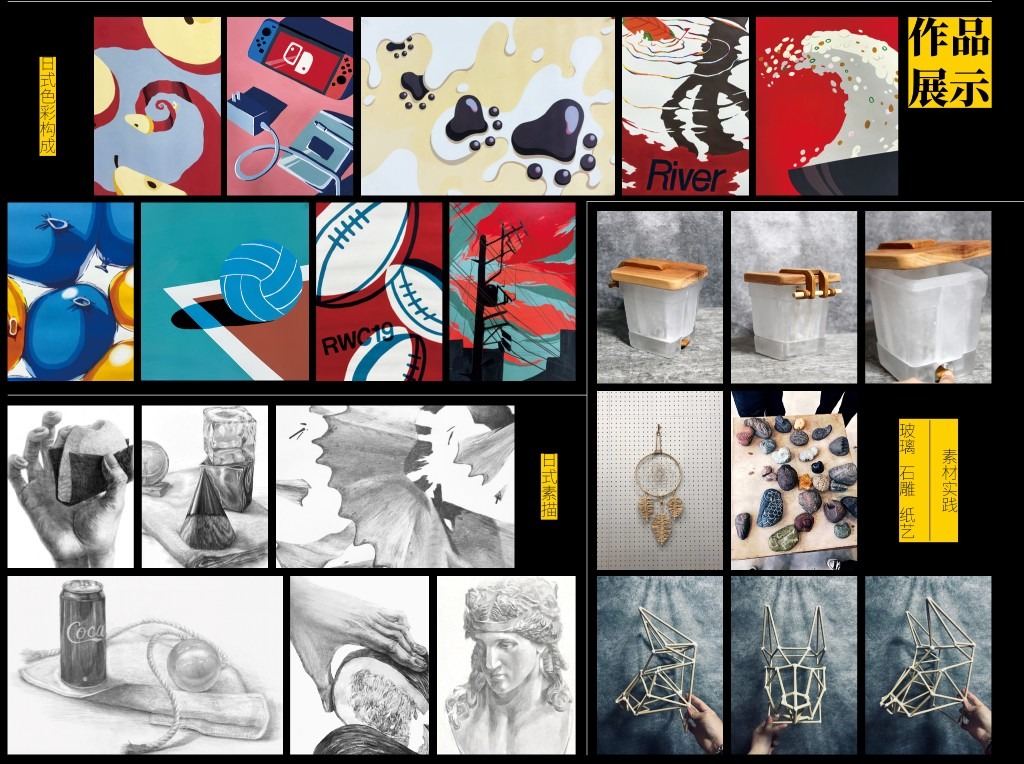
Student Works
Color Composition · Drawing · Materials practice
Six Career Paths
From Anime to Design — Diverse Career Paths
Japan's creative industry is robust — art-school graduates enter anime, games, design, architecture, fashion, and fine art.
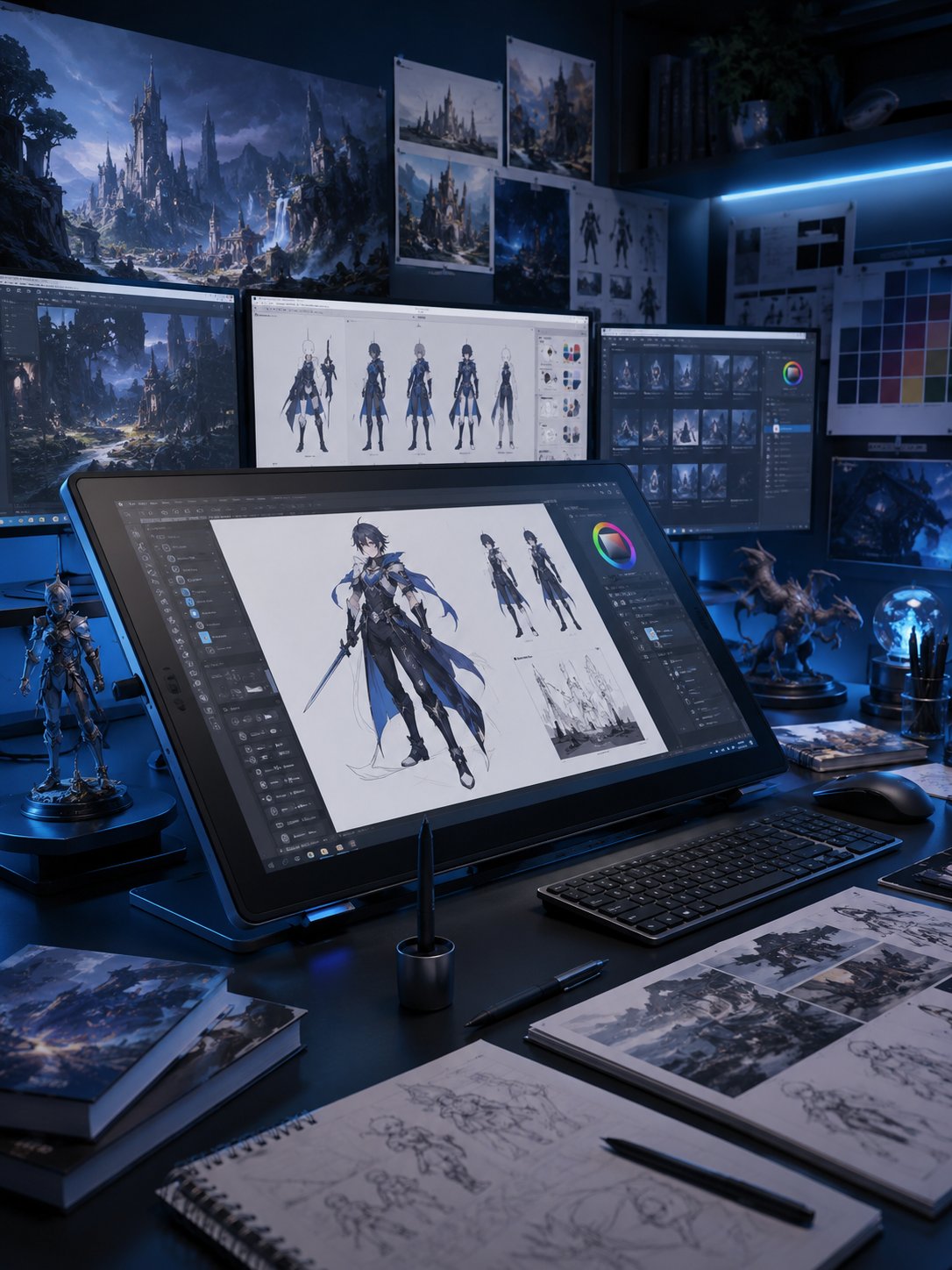
Anime / game design
Animation studios and game companies — character design, key animation, level design.

Graphic design / visual communication
Ad agencies and design studios — branding, posters, UI/UX.
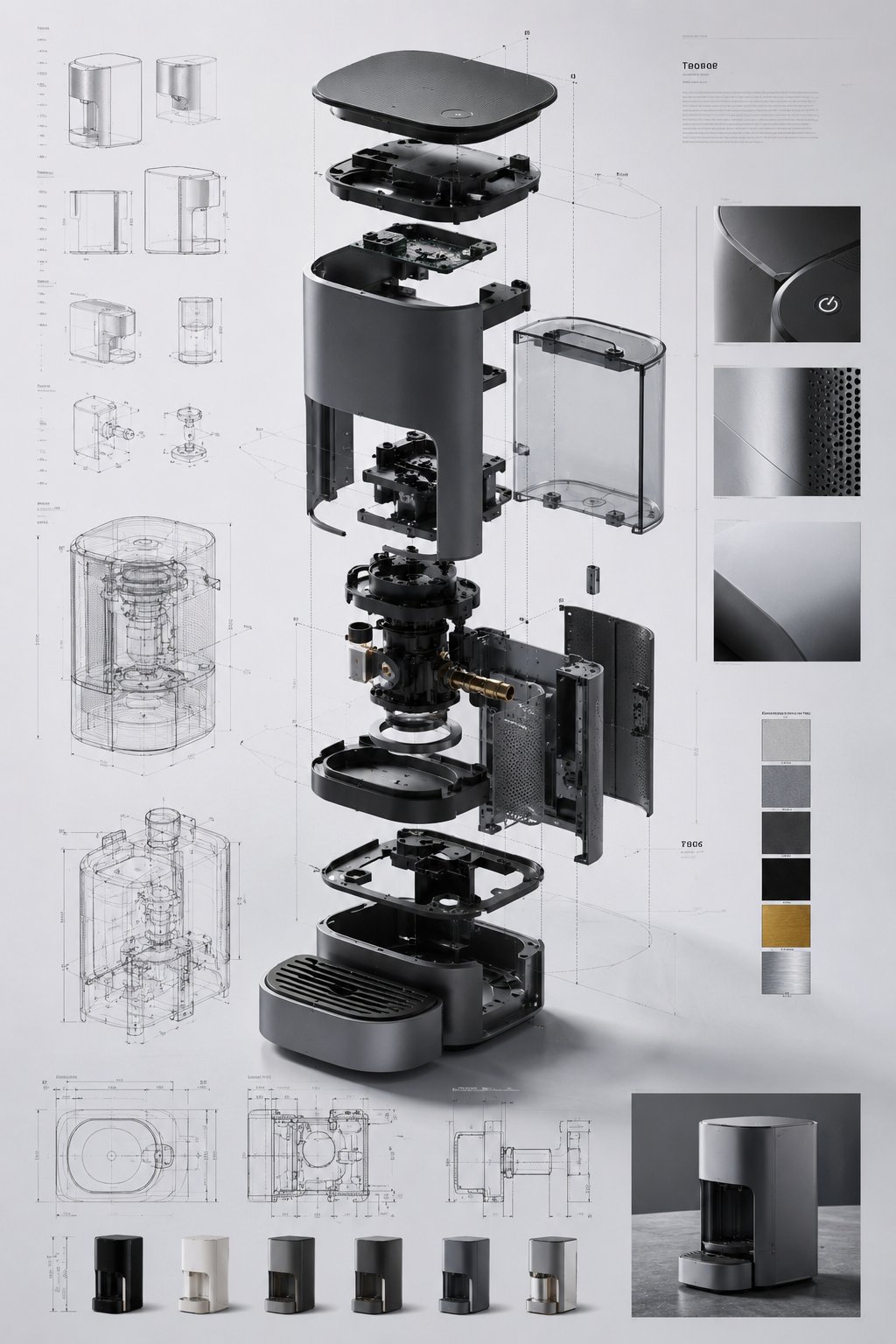
Industrial / product design
Manufacturers and design firms — appliances, furniture, consumer electronics.
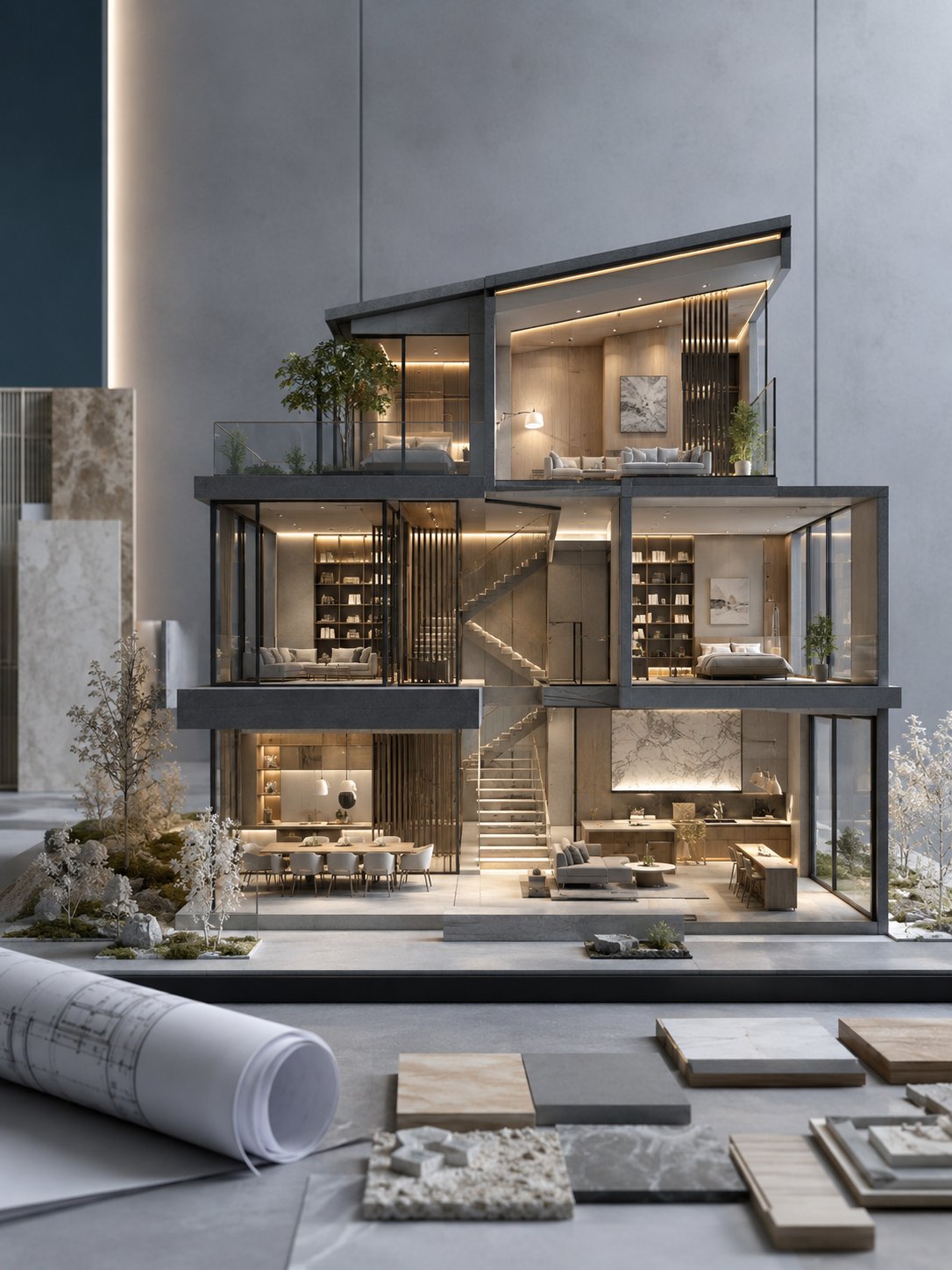
Architecture / interior / environmental design
Architectural design institutes and interior firms — public and commercial spaces.
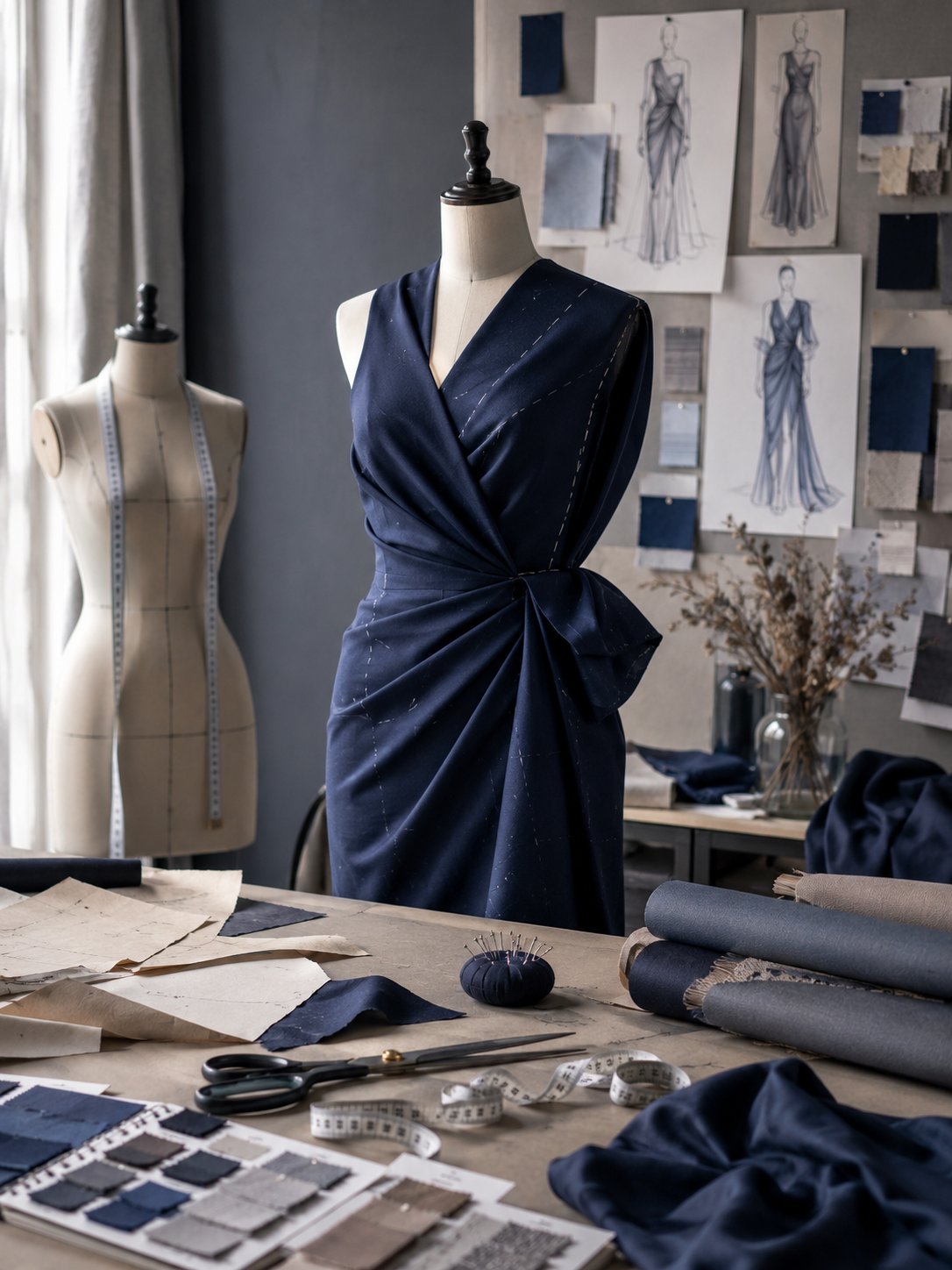
Fashion / apparel design
Fashion brands, apparel planning, fabric and textile design.
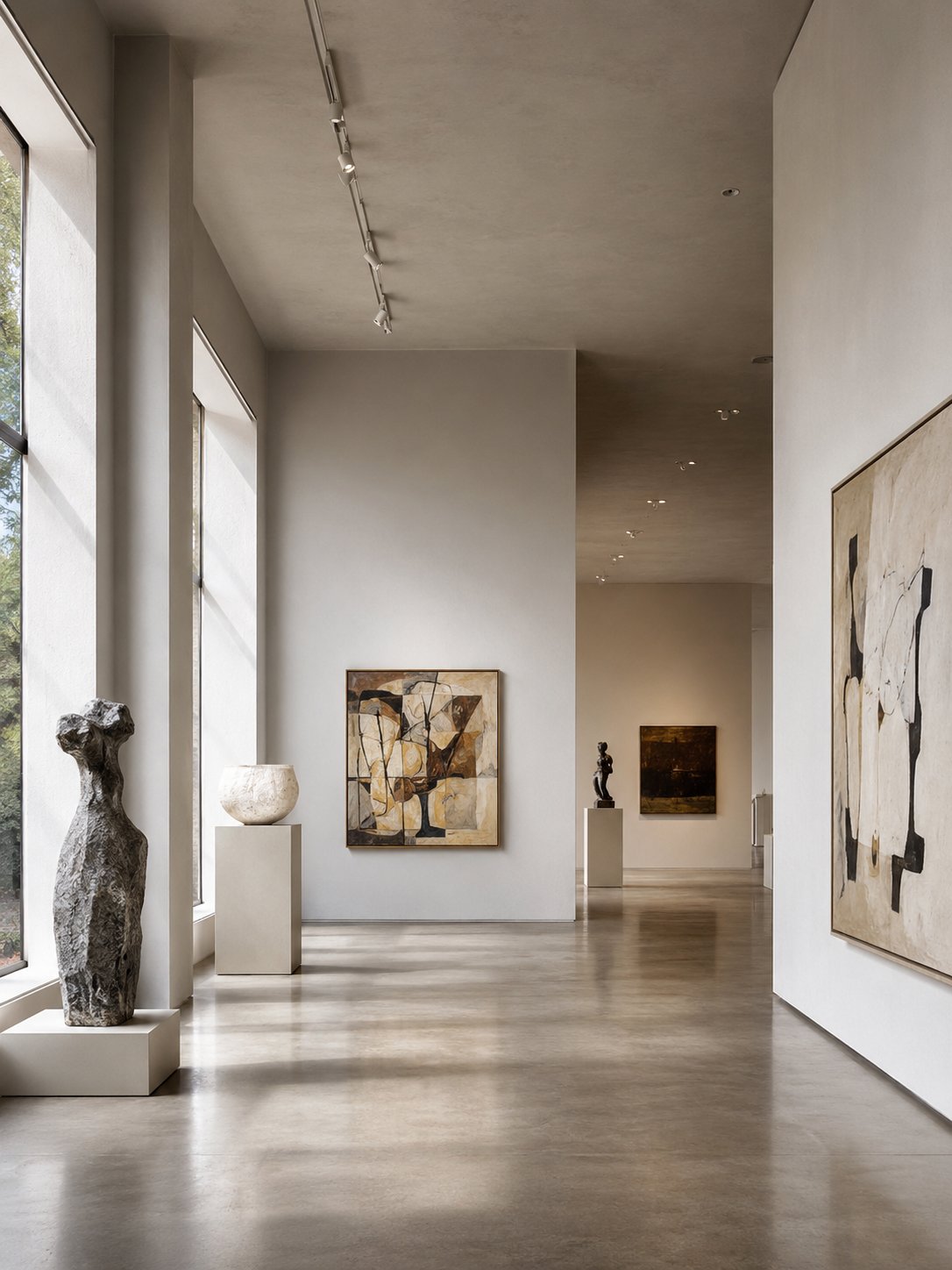
Fine art / independent artist / curation
Painting, sculpture, printmaking — independent artists, gallery and museum curation.
Partner Schools
13 Partner Schools — Art Track
Includes top-tier art universities (Tokyo Geidai, Musashino, Tama, Joshibi) and direct-recommendation partners (Bunsei, Kurashiki, JIMI). Students who complete the curriculum receive at least one offer from these partners.

Tokyo University of the Arts

Musashino Art University
Tama Art University

Kyoto Seika University

Kyoto University of the Arts

Joshibi University of Art and Design
Tokyo Zokei University

Osaka University of Arts

Nihon University College of Art

Kanazawa College of Art

Japan Institute of the Moving Image
Kurashiki University of Science and the Arts
Bunsei University of Art
4-Stage Roadmap
From Foundations to Japanese Art-School Exams
Stage-by-stage: N4 → N3 → JLPT/EJU push → in-country practical exam and interview.
- 01
Stage 1
Basic studies (N4) + drawing fundamentals
- ▸Pass JLPT N4
- ▸Drawing basics + tool conventions
- ▸Chinese art history
- 02
Stage 2
Basic studies (N3) + intermediate drawing
- ▸Pass JLPT N3
- ▸Material rendering + themed composition
- ▸Japanese art history
- 03
Stage 3
JLPT + EJU push + portfolio + interview
- ▸Final JLPT and EJU push
- ▸Scenario drawing + past-paper simulation
- ▸Portfolio curation and interview prep
- 04
Stage 4 (in Japan)
Official EJU + school-specific exams
- ▸Half-year transition at partner Japanese language school
- ▸Take the official EJU
- ▸Practical exam and interview at Japanese art schools
Outcomes
Art Track — 2024 Admissions (selected)
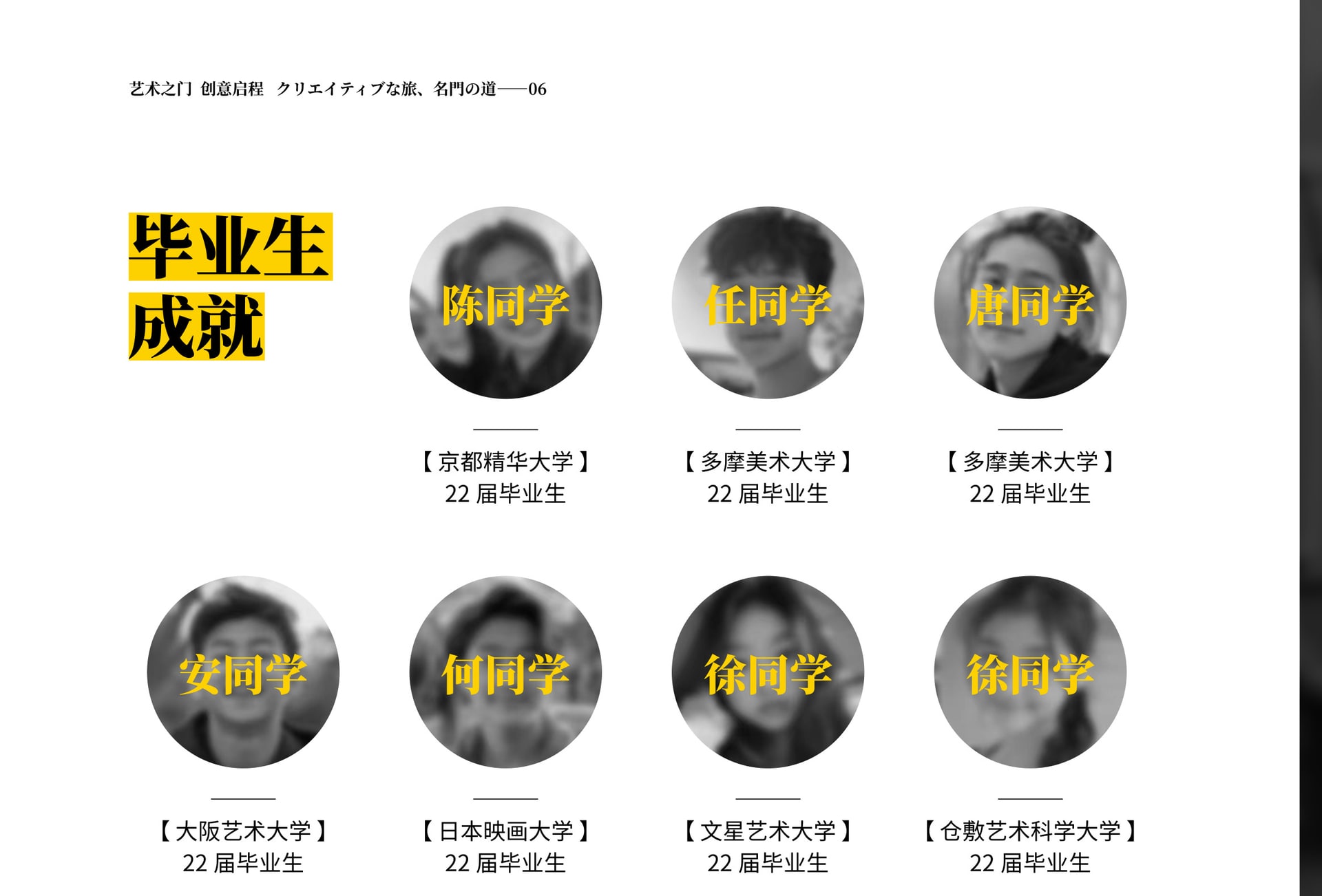
Top art universities including Musashino, Tama, Kyoto Seika, Joshibi, and Japan Institute of the Moving Image.
Tokyo University of the Arts
Musashino Art University
Tama Art University
Kyoto Seika University
Kyoto University of the Arts
Joshibi University of Art and Design
Tokyo Zokei University
Osaka University of Arts
Nihon University College of Art
Kanazawa College of Art
Bunsei University of Art